Are Ryobi Tools Good? The Honest ONE+ System Review
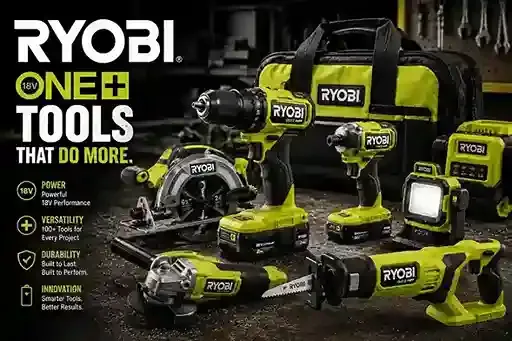
A dead drill halfway through building a deck frustrates anyone. Cheap tools strip screws, snap bits, and force you to buy replacements again and again. Ryobi tools solve this with the 18V ONE+ system—over 280 tools running on the same battery. You get reliable cordless power without emptying your wallet.
What Makes Ryobi Tools Different from Other Brands?
Ryobi tools carve out a unique space in the power tool world by focusing on affordability without sacrificing everyday capability. The brand refuses to lock you into a single battery ecosystem that leaves your older tools useless. Every 18V Ryobi tool ever made runs on every 18V Ryobi battery, a promise the company calls the ONE+ System. That backwards compatibility stretches your dollar because you can buy a 1996 blue drill at a garage sale and power it with a 2024 lithium pack.
Innovations like the magnetic bit holder on the drill base, the phone-charging USB lithium batteries, and the LINK storage system show Ryobi tools think about the user, not just the motor. The bright neon green color makes tools easy to spot on a cluttered bench, reducing the time you spend hunting for a missing impact driver.
The ONE+ 18V Battery Platform Explained
The ONE+ system powers over 280 different Ryobi tools across categories no competitor touches. You get common tools like drills and circular saws alongside oddball gems like misting fans, glue guns, and cordless soldering stations. A single battery slides into all of them.
Ryobi offers standard lithium packs in 1.5Ah, 2Ah, 4Ah, and 6Ah capacities, plus High Performance (HP) batteries with extra cell contacts that deliver more current to brushless tools. When an HP battery mates with an HP tool, the communication unlocks maximum runtime and power. Basic DIY tasks need nothing more than a 2Ah slim pack, while a 6Ah High Performance battery keeps a brushless grinder alive through a heavy welding cleanup.
Ryobi Tools History: From Garage Innovation to Global Brand
Ryobi tools started in Japan in 1943 as a die-casting manufacturer. The company ventured into power tools in the 1960s and soon introduced one of the first affordable cordless drills for home users. In 2000, the power tool division was acquired by Techtronic Industries (TTI), the same group that owns Milwaukee and Hoover.
TTI repositioned Ryobi tools as a Home Depot exclusive in North America, giving the brand massive retail reach. The decision to keep the iconic green color and the ONE+ battery stem changed home improvement. Today you see Ryobi tools in millions of garages, workshops, and even on professional job sites where budget matters.
Best Ryobi Tools for Home DIY Projects
- PBLDD01K Brushless Drill/Driver Kit: Compact ½-inch chuck, 750 in-lbs torque, and a two-speed gearbox make quick work of wood and metal.
- P262 18V Impact Wrench: 600 ft-lbs of breakaway torque spins lug nuts free without air hoses.
- P508 7-1/4″ Brushless Circular Saw: Cuts 2x material at 45 degrees; the electric brake stops the blade in under two seconds.
- P317 18-Gauge Brad Nailer: Fires 1¼” to 2” nails without a compressor, great for baseboards and trim.
- P4000 Clamp Fan: Moves serious air on hot attic days and runs all day on a 4Ah battery.
Each of these Ryobi tools leans on the ONE+ battery you already own, keeping costs low.
Ryobi Brushless vs. Brushed: Which Motor Technology Wins?
Brushed motors work fine for occasional use, but they produce friction, heat, and shorter runtime. Brushless motors use electronic control to eliminate physical brushes, extracting more work from each battery charge. Ryobi tools with the Brushless badge deliver up to 50% more runtime and longer motor life.
For weekend warriors hanging pictures, brushed drills cost less and perform well. However, if you plan to build a shed or cut dozens of pressure-treated posts, the brushless circular saw and impact driver become essential. Spend the extra $20–30 upfront on brushless Ryobi tools and you skip the frustration of a stalled blade mid-cut.
Ryobi 40V Outdoor Power Equipment: Lawn Mowers and Beyond
Ryobi tools extend into the yard with the 40V HP system. A 40V brushless self-propelled mower cuts half an acre on a single 6Ah battery. The expand-it string trimmer accepts attachments like an edger, pole saw, and cultivator. The 40V snow blower clears an 18-inch path through 8 inches of snow without gas.
Home Depot often bundles a 40V tool with a battery and charger at deep discounts during Ryobi Days. If you already own ONE+ 18V Ryobi tools for the house, the 40V lineup handles the heavy outdoor chores without a gas can.
Ryobi Tools Comparison Table: Key Specs at a Glance
| Model | Tool Type | Motor | Key Spec | Weight (Tool Only) | Approx. Price (Tool Only) |
| PBLDD01K | Drill/Driver | Brushless | 750 in-lbs torque, ½” chuck | 3.2 lbs | $79 |
| PCL235B | Drill/Driver | Brushed | 500 in-lbs torque, ½” chuck | 3.5 lbs | $39 |
| P262 | Impact Wrench | Brushed | 600 ft-lbs breakaway, ½” anvil | 6.0 lbs | $119 |
| P508 | Circular Saw | Brushless | 7-1/4″ blade, 5,400 RPM | 7.9 lbs | $89 |
| P440 | Random Orbit Sander | Brushed | 5″ pad, 10,000 OPM | 3.0 lbs | $35 |
| P1170 | 18V Battery | Lithium | 2.0Ah, ONE+ compatible | 0.8 lbs | $30 |
Prices sourced from The Home Depot and reflect typical bare-tool or battery-only retail. Kits with charger and battery cost m
How Ryobi Tools Stack Up Against DeWalt and Milwaukee
DeWalt and Milwaukee target professional tradespeople who demand maximum power and extreme durability. Their tools cost two to three times more. For a homeowner or handyman who drills pocket holes on weekends and assembles furniture, Ryobi tools deliver identical results for a fraction of the investment. The plastic housing on a Ryobi drill may not survive a 20-foot fall off a scissor lift, but it handles a drop from a step stool without complaint.
Independent tests from ToolBoxBuzz and Project Farm show Ryobi tools’ brushless drills hanging close to yellow and red competitors in drilling speed and runtime. The gap widens only under sustained heavy loads like mixing concrete. That edge rarely matters for non-industrial use, which makes Ryobi tools the smarter financial choice.
Who Should Buy a Ryobi Cordless Kit?
- First-time homebuyers who need a complete cordless kit under $200.
- DIY renovators tackling kitchen remodels, flooring, and furniture building.
- Crafters and hobbyists running hot glue guns, rotary tools, and inflators.
- Small business owners who outfit a maintenance cart without breaking the budget.
If your living depends on a tool running 10 hours a day, six days a week, professional brands justify their cost. But 80% of users fall squarely into the Ryobi sweet spot.
Can a Ryobi Cordless Handle Daily Professional Work?
Professionals in finishing trades, property maintenance, and even some electricians run ONE+ tools daily. A brushless impact driver sinks 3-inch screws into studs all day without overheating. The 18-gauge brad nailer and the compact router found permanent spots in many pro trailers because they weigh less and cost so little to replace if stolen.
You trade magnesium housings and sealed switches for affordability. Heavy rain and daily concrete dust shorten any tool’s life, but with basic protection these green machines produce professional-quality results shift after shift.
Maintaining Your Ryobi Batteries for Maximum Lifespan
Lithium-ion batteries hate heat and deep discharge. Pull the battery off the charger once the green light turns solid. Never store a dead battery for weeks; charge it to 50% (two lights on the fuel gauge) before long-term storage. Avoid leaving batteries in a hot truck cab or freezing garage. The Intelliport charger monitors each cell and prevents overcharging, but a little care extends service life to five or more years.
Where to Buy Genuine Ryobi and Avoid Counterfeits
Ryobi sells exclusively at The Home Depot in North America, both in-store and online. Official Ryobi Days and Black Friday events offer massive bundle deals. The brand also operates Direct Tools Outlet, a factory blemished and refurbished reseller where you can snag serious discounts with full warranty.
Third-party sellers on Amazon or eBay sometimes list products at prices too good to be true. These often arrive with foreign chargers, missing safety certifications, or counterfeit batteries that pose fire risks. Stick to Home Depot or Direct Tools Outlet and you never gamble on safety.
Frequently Asked Questions
Are Ryobi power tools good for serious home improvement?
Yes. Ryobi power tools deliver reliable performance, a huge ONE+ selection, and excellent battery life for nearly every household project. Countless garages rely on them.
What is the Ryobi ONE+ system?
It’s an 18V battery platform where over 280 tools share the same battery. The stem-shaped pack slides into tools from drills to leaf blowers, ensuring total compatibility.
How long do Ryobi batteries last on a single charge?
Runtime depends on the amp-hour rating and the tool. A 2Ah pack runs a drill for roughly 45–60 minutes of mixed use; a 6Ah High Performance battery pushes a circular saw through 50+ cuts in 2×4 lumber.
Can new ONE+ batteries be used with old blue Ryobi tools?
Yes. Every 18V Ryobi tool ever produced fits every 18V ONE+ battery, regardless of color or age. That includes the original blue tools from 1996.
Where are Ryobi power tools made?
Ryobi power tools are designed globally and manufactured primarily in China, with engineering oversight from TTI. Components come from various countries, and final assembly occurs in TTI-owned factories.
Can a Ryobi brushless drill mix mortar or concrete?
A brushless hammer drill with an HP battery can bore ½-inch holes in cured concrete. Mixing bag after bag of mortar pushes the tool to its limit; a corded mixer remains the safer choice for large pours.
Build Your Workshop Without Breaking the Bank
The ONE+ system’s backward compatibility and massive tool selection make it the most homeowner-friendly cordless platform on the market. Grab a starter kit during the next Ryobi Days sale, add tools as your skills grow, and watch your workshop transform. Drop a comment below with your favorite Ryobi tool—the community wants to hear which one surprised you the most. Share this guide with a neighbor who still uses that old corded drill.