Spider-Man: Brand New Day: The Complete Story, Changes, and Legacy
Peter Parker’s world crumbled. His identity exposed, Aunt May lay dying, and every choice he made only tightened the noose. The weight of that disaster forced Marvel’s hand. Spider-Man: Brand New Day threw out the old rules, erased Peter’s marriage, and rebuilt his life from scratch. This guide unpacks exactly how that happened, what changed, and why the fallout still matters.
What Is Spider-Man: Brand New Day?
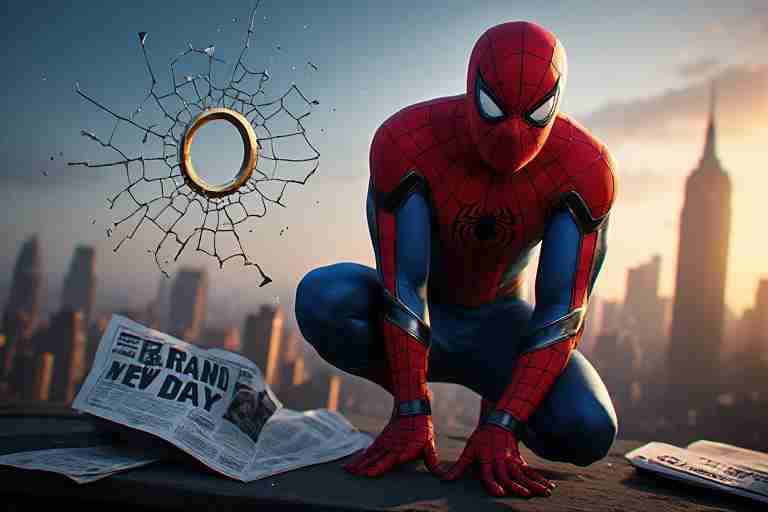
Spider-Man: Brand New Day is a 2008 publishing initiative that reset the core continuity of The Amazing Spider-Man. The story wiped Peter Parker’s public unmasking and annulled his marriage to Mary Jane Watson. Marvel swapped the married hero for a single, struggling twenty-something, launched thrice-monthly issues, and handed the reins to a rotating “Brain Trust” of writers. The new direction began in Amazing Spider-Man #546 and ran for over 100 issues, defining the character for a generation of readers.
The Road to Brand New Day: One More Day Recap
The reset started with the 2007 story One More Day. Aunt May suffered a gunshot wound after Peter revealed his identity during Civil War. Doctors declared her case hopeless. Desperate, Peter and Mary Jane accepted a deal from the demon Mephisto. In exchange for May’s life, Mephisto demanded their marriage — not a divorce, but a reality rewrite that made the union never happen. A single whisper of “Yes” erased years of shared history and set the stage for Spider-Man: Brand New Day.
Key facts about One More Day:
- Written by J. Michael Straczynski and Joe Quesada.
- Published in Amazing Spider-Man #544, Friendly Neighborhood Spider-Man #24, Sensational Spider-Man #41, and Amazing Spider-Man #545.
- The deal also restored Peter’s secret identity, making the world forget he was Spider-Man.
- Harry Osborn returned alive, with no memory of his death in Spectacular Spider-Man #200.
External reference: Marvel’s official One More Day reading guide confirms the storyline’s place as the immediate predecessor to Brand New Day (marvel.com).
The Faustian Deal: How Peter’s Marriage Vanished
Mephisto fed on the couple’s love, calling it a rare, pure thing that he craved above all else. The narrative framed the choice as Peter sacrificing his happiness to save an innocent life. Mary Jane made the final plea, but Peter accepted the terms. Reality rippled backward and forward. Vows, shared apartments, the child they lost — all dissolved. Peter woke up alone in his Aunt May’s house, single and unknown as Spider-Man. This emotional gut punch became the bedrock of Spider-Man: Brand New Day.
A Fresh Start: Peter Parker’s New Status Quo
Post-deal, Peter scraped by on a freelancer’s budget. He crashed at Aunt May’s home in Forest Hills, Queens, with no steady job and no girlfriend. The Front Line newspaper gig disappeared. Rent money became a recurring problem. Spidey swung through a city that forgot his face, and Peter dated again. The shift grounded the hero, returning him to a world where his double life carried real risk.
The creative team built several core pillars for this new normal:
- Secret identity restored: Nobody remembered the unmasking. Peter could be anonymous again.
- No Mary Jane romance: MJ remained a character but no longer shared a romantic past with Peter.
- Single social circle: Peter mingled with friends at the coffee shop The Coffee Bean, not a superhero base.
- Web-shooters refocused: Organic webbing vanished; mechanical shooters returned as a deliberate nod to classic stories.
The Revamped Supporting Cast
Spider-Man: Brand New Day reintroduced familiar faces with fresh dynamics. Harry Osborn came back as a wealthy friend who didn’t know Peter’s secret, flipping their old dynamic. J. Jonah Jameson suffered a heart attack and later became New York’s mayor, adding political tension. New characters entered too — police officer Carlie Cooper became a forensic scientist and a long-term love interest. Norah Winters, a pushy Front Line reporter, gave Peter a professional rival and occasional ally. The tight-knit ensemble brought daytime soap energy to the series, making Peter’s civilian world just as engaging as the costume drama.
Entity-rich snapshot of key cast changes:
| Character | Role Before BND | Role After BND |
|---|---|---|
| Harry Osborn | Deceased; former Green Goblin | Alive, close friend of Peter, unaware of his double life |
| Mary Jane Watson | Peter’s wife | Successful actress/model; no romantic history with Peter |
| J. Jonah Jameson | Daily Bugle publisher | Recovering heart patient, eventually mayor of NYC |
| Aunt May | Widow knowing Peter’s secret | Unaware of Peter’s dual identity; running a soup kitchen |
| Flash Thompson | Estranged bully | War veteran, Peter’s supportive friend |
New Villains and Returning Threats
Fresh adversaries stalked the pages alongside classic rogues. Menace, a goblin-themed mystery villain, terrorized election season with ties to the Osborn lineage. Mister Negative, Martin Li, split his persona between charitable philanthropist and ruthless crime lord, corrupting anyone he touched. Kraven’s family emerged, and the Lizard returned with horrific twists. Electro got a power upgrade that made him a city-level threat. These foes kept the book unpredictable and violent, balancing lighter character moments with high-stakes brawls.
External reference: CBR’s analysis of Mister Negative’s origin highlights how the villain became a standout element of the Spider-Man: Brand New Day era (cbr.com).
The Creative Brain Trust: Writers and Artists
Marvel assembled a rotating writing team dubbed the “Spider-Man Brain Trust” to sustain the thrice-monthly schedule. The core group included Dan Slott, Marc Guggenheim, Bob Gale, and Zeb Wells. Artists like Steve McNiven, Marcos Martin, and John Romita Jr. defined the visual identity. The rapid-fire method kept arcs tight — stories ran three to six issues, then handed off to the next team. Dan Slott eventually became the sole writer, steering Peter into “Big Time” and beyond, but the collaborative engine of Spider-Man: Brand New Day set the template.
How Brand New Day Reshaped Spider-Man Lore
Beyond the marriage, the reset altered dozens of continuity threads. Peter’s organic web-shooters, introduced in the early 2000s, reverted to mechanical devices. The Other powers — stingers, enhanced senses — faded away. A mystical spider-god named Anansi emerged as a subtle totemic force in one Slott-penned arc, prefiguring the Spider-Verse saga. The erasure of the marriage also meant Peter never had a stillborn daughter with MJ, simplifying his emotional backstory. These changes gave creators breathing room, even though they sparked heated debate among long-time fans.
The following quick list shows lore shifts that rippled through the series:
- Mechanical web-shooters reintroduced (issue #546).
- No memory of the unmasking or the Stark-built Iron Spider suit.
- Harry Osborn’s resurrection explained as an undocumented recovery from his overdose.
- The Daily Bugle sold to Dexter Bennett, becoming the trashy DB! tabloid.
Fan Reception: Controversy and Praise
Spider-Man: Brand New Day polarized the fandom instantly. Hardcore readers saw the marriage erasure as a betrayal of decades of character growth. Many boycotted the book. Others celebrated the creative surge — tighter storytelling, livelier banter, and a return to relatable, down-on-his-luck Peter. Sales initially spiked with the thrice-monthly format, proving the commercial gamble paid off. Over time, the era earned grudging respect for its boldness and consistency. Critics today acknowledge that while the means were messy, the end result produced some of the best Spider-Man tales of the late 2000s.
External reference: Screen Rant’s retrospective notes that despite controversy, Spider-Man: Brand New Day directly paved the way for major modern arcs like Spider-Island and Superior Spider-Man (screenrant.com).
Key Story Arcs You Must Read
The sheer volume of issues can overwhelm new readers. Focus on these standout arcs from the Spider-Man: Brand New Day era.
“Brand New Day” (#546-548) – The opening arc by Slott and McNiven reintroduces a single Peter, a new villain in Mister Negative, and a murder mystery at Aunt May’s soup kitchen.
“New Ways to Die” (#568-573) – Norman Osborn’s Thunderbolts hunt Spidey. Anti-Venom debuts. The action redefines the Osborn-Parker dynamic under Dan Slott and John Romita Jr.
“American Son” (#595-599) – Harry Osborn dons the American Son armor to confront his father Norman. A deeply emotional arc that tests Harry’s loyalty and Peter’s secret.
“The Gauntlet” (#612-633) – A prelude to Grim Hunt, this longform story brings back classic foes one by one, each deadlier than before, pushing Peter to his physical and mental limits.
“Shed” (#630-633) – The Lizard’s tragic intelligence surfaces, leading to a brutal confrontation. Zeb Wells and Chris Bachalo craft a horror-tinged masterpiece.
“Grim Hunt” (#634-637) – Kraven’s family resurfaces to resurrect Sergei Kravinoff. The story digs into Spidey’s killer instinct and the meaning of legacy.
External reference: Marvel’s official reading order for The Amazing Spider-Man: Brand New Day Complete Collections groups these arcs in chronological sequence (marvel.com).
Brand New Day’s Lasting Legacy
Spider-Man: Brand New Day left an imprint that endures. It normalized thrice-monthly superhero comics and proved a shared writing room could deliver cohesive longform storytelling. The era gave birth to Dan Slott’s decade-long run, which culminated in Superior Spider-Man and Spider-Verse. Martin Li’s Mister Negative became a breakout villain, later adapted into the 2018 Marvel’s Spider-Man video game. The retconned marriage remains a sensitive topic, but the energy and narrative risk-taking of BND still influences how Marvel approaches character refreshes.
Frequently Asked Questions
Why did Marvel launch Spider-Man: Brand New Day?
Marvel’s editorial team believed Peter Parker needed to return to a single, relatable status quo. They saw the marriage as a creative restriction that limited storytelling and aged the character too much for younger readers.
What happened to Mary Jane after Brand New Day?
Mary Jane remained in the series as a successful actress and close friend. The romantic history vanished, but the writers slowly rebuilt a friendship that occasionally hinted at deeper feelings without restoring the marriage.
Did Brand New Day erase all of Spider-Man’s continuity?
No. The Mephisto deal specifically erased the public unmasking and the marriage. Most other events still happened, though some details shifted slightly. The writers respected broad history while removing the wedding ring.
Who wrote the best arcs in Spider-Man: Brand New Day?
Dan Slott wrote the iconic opener and “New Ways to Die.” Zeb Wells delivered emotional gut-punches with “Shed.” Marc Guggenheim and Joe Kelly also contributed memorable character-driven issues that fans still recommend.
Is Brand New Day a good starting point for new readers?
Yes. The reset provides a clean entry. You don’t need decades of backstory. Amazing Spider-Man #546 begins a fresh chapter with a single, secret-identity Peter, making it one of the most accessible modern jumping-on points.
How long did the Brand New Day era last?
The core labeling ran from Amazing Spider-Man #546 (January 2008) to #647 (November 2010). The spirit of the reset, however, shaped the title until the “Big Time” arc and beyond.
Every page of Spider-Man: Brand New Day pulls you into a world where one desperate choice rewrites a hero’s life. Grab the collected editions, pick up Amazing Spider-Man #546, and experience the stories that split the fanbase yet refused to be ignored. Whether you side with the critics or the champions, the era demands your attention — and a spot on your shelf.