Tralalero Tralala Meaning
Have you recently found yourself humming a strange, catchy tune that goes “tralalero tralala”? If so, you are definitely not alone! This quirky phrase has taken the internet by storm, especially across the USA, leaving millions of social media users scratching their heads. At first glance, it sounds like a simple, happy jingle you might hear in a classic cartoon or a children’s nursery rhyme. However, as with most things that go viral in 2026, there is a much deeper—and sometimes more chaotic—story hidden beneath those playful syllables. Whether you saw it on a TikTok dance or a surreal meme, understanding the “tralalero tralala meaning” is your ticket to staying culturally savvy in this fast-paced digital age.
The beauty of this phrase lies in its incredible versatility. To some, it represents a carefree attitude, while to others, it is the face of a new genre of internet humor known as “Italian Brainrot.” In this comprehensive guide, we are going to dive deep into every corner of this phenomenon. We will explore its traditional Italian origins, its explosive growth on social media, and even the controversies that have sparked heated debates online. By the time you finish reading, you will be an absolute expert on everything related to this whimsical chant. So, let’s embark on this journey to uncover the secrets behind the sounds that are currently dominating your “For You” page!
What Exactly is the Tralalero Tralala Meaning?
At its most basic level, the tralalero tralala meaning is rooted in the world of music and onomatopoeia. In many languages, particularly Italian, these words serve as “filler syllables.” Think of them as the Italian equivalent of saying “la la la” or “dum de dum” in English. They don’t have a literal dictionary definition that you can look up to find a specific object or action. Instead, they are used to mimic a melody or to keep the rhythm of a song when the singer doesn’t know the actual lyrics. It is a linguistic tool designed for joy, rhythm, and a lighthearted vibe that transcends borders.
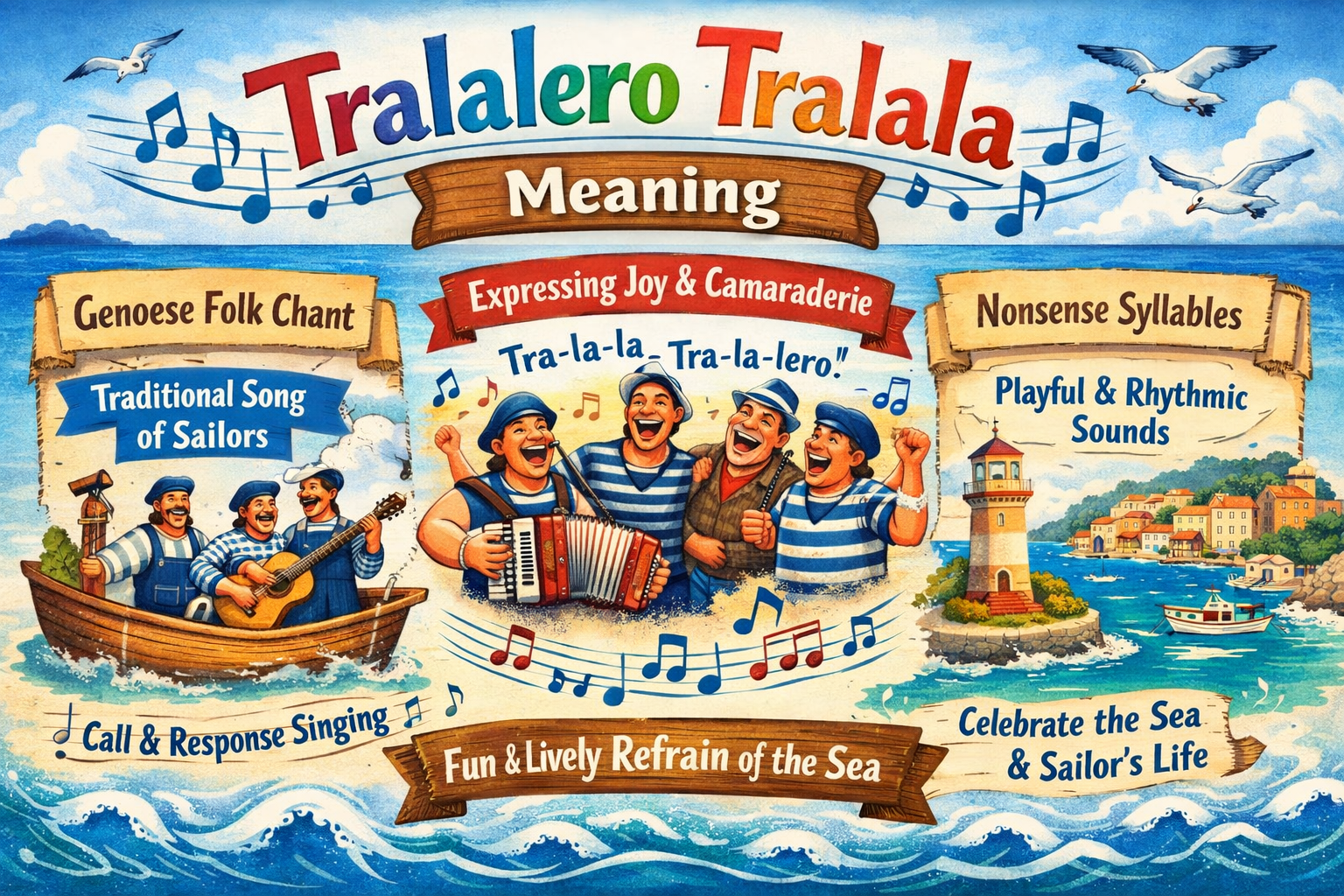
Historically, the word “trallallero” has a very prestigious background in Italy. It actually refers to a traditional style of polyphonic folk singing from the city of Genoa. In this traditional setting, groups of men use their voices to imitate instruments, creating a rich and complex soundscape without any actual tools. However, the version we see today on the internet has shifted away from these classical roots. Now, it is used more as a symbol of “brainrot” content—content that is intentionally nonsensical, absurd, and designed to be stuck in your head for hours on end. It’s a fascinating example of how language evolves in the digital era.
The Rise of the “Italian Brainrot” Meme Culture
To truly understand why everyone is searching for this phrase, we have to talk about “Italian Brainrot.” This is a unique sub-genre of internet memes that combines AI-generated imagery with chaotic Italian voiceovers. The star of this trend is often a bizarre, three-legged shark wearing blue Nike sneakers. This character, often referred to as “Tralalero Tralala,” has become a digital icon for Gen Alpha and Gen Z. The memes usually feature this shark in surreal environments, performing tasks like playing Fortnite or arguing with his “shitty son” in a robotic, synthesized Italian voice.
This trend exploded in early 2025 and has only gained momentum moving into 2026. What makes it so popular in the USA is the sheer absurdity of the visuals. In a world where content is often polished and professional, “brainrot” offers a refreshing, albeit confusing, break into pure silliness. The phrase “tralalero tralala” acts as the calling card for this movement. It signals to the viewer that they are about to see something completely illogical yet undeniably entertaining. It’s the ultimate “inside joke” shared by millions of people across social media platforms like TikTok, Instagram, and YouTube.
Deep Dive into the Origin: Genoese Folk Traditions
While the internet might have made it weird, the true “tralalero” has a beautiful history. As mentioned earlier, it stems from the Trallalero singing style of Genoa, Italy. This isn’t just a random chant; it’s a sophisticated art form that has been passed down through generations of longshoremen and workers. These singers form “squads” where each person plays a specific vocal role. One might be the “guitar” (mimicking the strings), while another is the “tenor” or the “bass.” They use the syllables “tra-la-le-ro” to build the musical structure of their songs, showcasing incredible vocal talent.
It is quite ironic that such a traditional and respected musical style has become the foundation for a 2026 meme about a shark in Nikes. This transition shows the power of the internet to “remix” culture. Today’s creators likely heard the rhythmic, catchy nature of the word and realized it was perfect for a short-form video. While some traditionalists might find the meme disrespectful, others see it as a way to keep the phonetics of the word alive in the global consciousness. It’s a bridge between the old-world docks of Italy and the high-tech smartphone screens of the United States.
Why the USA is Obsessed with This Phrase
You might be wondering why a seemingly Italian phrase has found such a massive audience in the USA. The answer lies in the universal appeal of “catchiness.” The American audience loves a good “earworm,” and the rhythmic bounce of “tralalero tralala” is perfect for that. Additionally, American meme culture has always embraced the “weird and wonderful.” The shark character fits perfectly into the aesthetic of “surrealism” that has been popular in the States for years. It’s the kind of content that makes you stop scrolling because you simply cannot believe what you are seeing.
Furthermore, the “Italian-ness” of the meme adds a layer of exotic humor. For many Americans, the exaggerated Italian accent and the specific cultural markers (like Nikes or specific Italian names) make the content feel like a parody of global stereotypes. This makes it incredibly shareable. When a user in New York or Los Angeles shares a “tralalero” video, they aren’t just sharing a joke; they are participating in a global cultural moment. It’s a way for people to connect through shared confusion and amusement, proving that humor truly is a universal language.
Understanding the Controversial “Full Version”
As the meme grew, a “full version” of the audio began to circulate, and this is where things get a bit complicated. The original audio associated with the shark character wasn’t just a happy song. It was an AI-generated monologue that included several Italian “bestemmie”—which are highly offensive religious slurs in Italian culture. Specifically, the audio mentioned “porco” (pig) alongside the names of deities. This led to many people calling the trend “blasphemous” and “haram” within religious communities. Many users who initially enjoyed the catchy tune were shocked to find out the literal translation of the background words.
Because of this, many social media platforms have had to moderate or even ban the original audio clips. This created a divide in the community: those who saw it as harmless, nonsensical “brainrot,” and those who felt it was deeply offensive to their faith. If you are using this phrase or sharing the meme, it is important to be aware of this history. Most modern versions of the meme have removed the offensive parts, focusing solely on the “tralalero tralala” chant and the funny visuals. This allows the trend to stay alive while being more respectful to a global audience.
| Feature | Traditional Roots | Modern Meme Version |
|---|---|---|
| Origin City | Genoa, Italy (19th Century Folk Style) | Social Media / AI Tools (Viral 2026 Trend) |
| Core Meaning | Polyphonic singing using filler syllables. | “Brainrot” humor—intentionally surreal content. |
| Key Element | Professional male vocal squads (Canterini). | 3-Legged Shark wearing blue Nike sneakers. |
| Sound Style | A cappella (Voice mimicking instruments). | AI-synthetic voices mixed with Phonk beats. |
| Popularity | Local Italian cultural heritage. | Massive USA & Global TikTok/Reels trend. |
| Emotional Tone | Artistic, powerful, and nostalgic. | Absurd, funny, and chaotic “inside joke.” |
| Visual Impact | Formal choir settings in Italy. | “Cursed” AI slop art and 3D animations. |
| Controversy | None (Highly respected folk art). | High (Due to offensive AI-generated slurs). |
The Psychological Appeal of “Brainrot” Content
Why do our brains love this stuff so much? “Tralalero tralala” is a prime example of “low-stakes” entertainment. In a world full of heavy news and complex social issues, our minds often crave something that requires zero effort to process. This is the essence of “brainrot.” When you see a shark dancing to a rhythmic Italian chant, your brain releases dopamine because the content is novel, colorful, and repetitive. It’s a form of digital escapism that allows you to turn off your critical thinking for a few seconds and just enjoy the rhythm.
Psychologists often note that repetitive sounds like “tra la la” are soothing to the human ear. They remind us of the simple nursery rhymes of our childhood. By combining these comforting sounds with high-energy visuals, creators have found a “cheat code” for virality. It hits both the nostalgic parts of our brain and the parts that seek out new, exciting stimuli. This is why the tralalero tralala meaning has shifted from a simple song to a psychological phenomenon. It’s not just about the words; it’s about how those words make us feel in a crowded digital landscape.
How to Use the Phrase Naturally in Conversation
If you want to join in on the fun, knowing how to use the phrase is key! In 2026, using “tralalero tralala” is usually a sign that you are being playful or dismissive of something serious. For example, if your friend is stressing out over a tiny problem, you might say, “Just tralalero tralala through it!” to tell them to relax and not take things too seriously. It’s also commonly used in the comments sections of funny or weird videos. Simply typing the phrase is a way of saying, “I’m part of the group that gets this weird humor.”
However, because of the controversies mentioned earlier, you should always use it in a lighthearted way. Avoid using the “full” AI-monologue version if you want to remain respectful to everyone’s beliefs. The best way to use it is as a “vibe check.” It’s a fun, rhythmic addition to your digital vocabulary that shows you’re up to date with the latest trends. Whether you’re making your own video or just chatting with friends, it’s a great way to add a bit of international flair and absurdist humor to your day!
Impact on Fashion and Pop Culture: The “Nike Shark” Effect
Believe it or not, this meme has even influenced fashion! The image of the shark wearing blue Nike sneakers has become so iconic that some people have started creating custom “Tralalero” apparel. From t-shirts to actual sneaker modifications, the “Nike Shark” aesthetic is a real thing in 2026. It represents a blend of “slop” (intentionally low-quality AI art) and high-end brand culture. This juxtaposition is exactly what makes modern memes so powerful—they take something elite, like a pair of Nikes, and make it part of a ridiculous joke.
Brands have also taken notice. Don’t be surprised if you see marketing campaigns that subtly reference these “brainrot” characters. By tapping into the tralalero tralala meaning, companies can show that they are “in” on the joke, which helps them connect with younger audiences who ignore traditional advertising. This phrase has proven that a simple, nonsensical sound can eventually turn into a marketing goldmine and a fashion statement. It just goes to show that in the age of the internet, anything is possible if it has a good rhythm!
Tips for Spotting Real vs. AI Brainrot Content
As “tralalero tralala” continues to trend, the internet is becoming flooded with “AI slop”—content generated by bots to farm views. To find the best and most original “tralalero” content, look for videos that add a personal touch. Real human creators will often add their own dances, voiceovers, or unique edits to the meme. If you see a video that looks like a carbon copy of ten others, it’s likely just bot-generated. The most “humanized” versions of this trend are the ones where people interact with the shark or tell their own stories using the audio.
To rank well or get views yourself, you should aim for “Information Gain.” Don’t just post the shark dancing; maybe explain the Italian roots or show how you made your own version of the character. Google and social media algorithms in 2026 prioritize “people-first” content. By adding your own perspective to the tralalero tralala meaning, you are contributing something valuable to the digital conversation. This is the secret to staying relevant in a world where AI can generate a thousand videos in a second.
Conclusion: Embracing the Chaos of Tralalero Tralala
In conclusion, the tralalero tralala meaning is a fascinating mix of ancient Italian tradition and modern-day internet madness. What started as a beautiful folk singing style in Genoa has transformed into a global “brainrot” phenomenon that keeps us all laughing (and a bit confused). It’s a reminder that culture is never static; it’s always moving, changing, and being remixed by the people who use it. Whether you love the “Nike Shark” or you just enjoy the rhythmic sound of the words, there is no denying that this phrase has left a permanent mark on 2026’s digital landscape.
So, the next time you hear that familiar “tralalero tralala,” you won’t just be hearing nonsense. You’ll be hearing the echoes of Italian workers, the creativity of modern meme-makers, and the heartbeat of a global internet community. It’s a silly, wonderful, and slightly chaotic part of our modern world. Why not embrace it? Life is better when you have a catchy tune to hum, even if it’s about a three-legged shark in sneakers. Go ahead and share the joy, keep the rhythm alive, and maybe even start a “tralalero” trend of your own!
Frequently Asked Questions (FAQs)
1. Is “Tralalero Tralala” a real Italian word?
Not exactly! “Tralalero” is based on a real singing style from Genoa called Trallalero, but in the meme, it is used as a “filler word” or nonsense syllable. It’s like saying “la la la” in English.
2. Why is there a shark in Nike shoes associated with this?
This is part of a trend called “Italian Brainrot.” Creators used AI tools to generate absurd images, and the shark in Nikes became the most viral character. It’s meant to be funny because it’s so illogical.
3. Is the tralalero tralala song offensive?
The “tralalero tralala” syllables themselves are not offensive. However, the original AI-generated audio clip contained Italian religious slurs. Most people today use “clean” versions that are perfectly safe and fun to hear.
4. How did this trend start in the USA?
It migrated from Italian social media to the USA in early 2025. American users loved the “cursed” AI visuals and the catchy rhythm, leading to millions of shares and recreations.
5. What does “brainrot” mean in this context?
“Brainrot” refers to internet content that is intentionally absurd, low-effort, and incredibly catchy. It’s called brainrot because you can watch it for hours without needing to think deeply.
6. Can I use this phrase in my own TikTok videos?
Absolutely! It’s a very popular audio trend. Just make sure to use a version of the audio that is respectful and fits the “fun” vibe of your content to get the best engagement.
About the Author